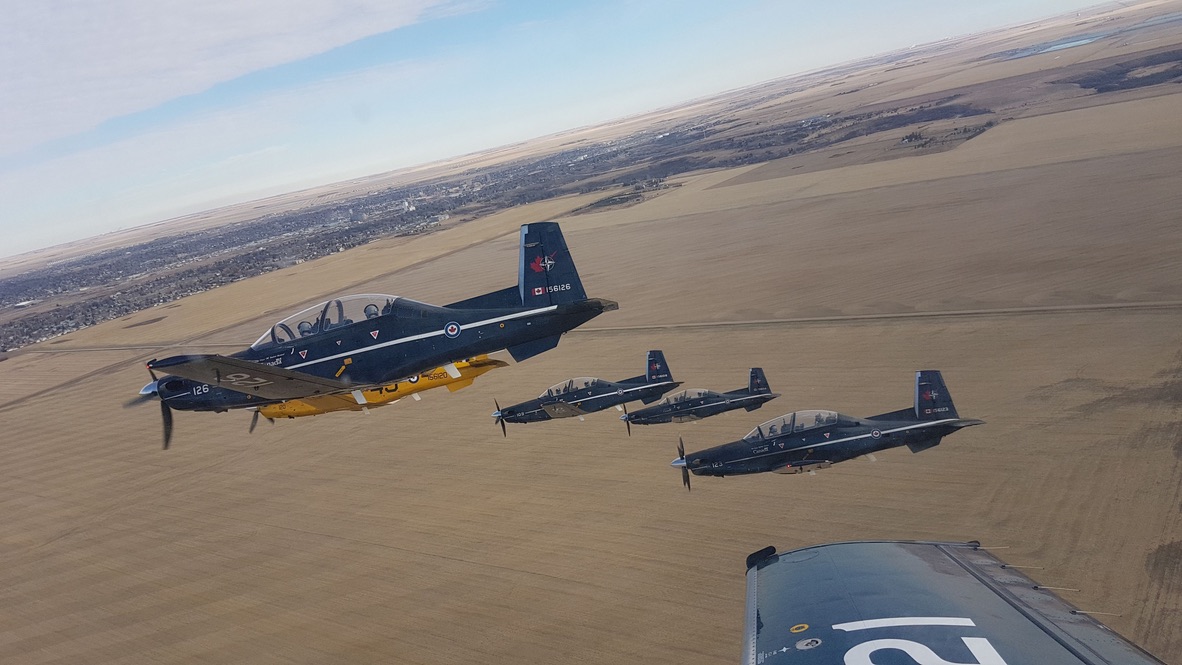
Your Guide to Succeeding in the RCAF Phase II Flying Training Course
If you’re about to start the Royal Canadian Air Force (RCAF) Phase II flying training course, you’re stepping into one of the most exciting and challenging parts of your pilot journey. This course is designed to take the foundational skills you’ve built and push you to new heights—literally and figuratively. At the heart of this training is the CT-156 Harvard II, an aircraft that’s as versatile as it is powerful. Let’s dive into what you can expect and how you can set yourself up for success.
Meet Your Aircraft: The CT-156 Harvard II
You’re going to be spending a lot of time in the CT-156 Harvard II, so it’s worth getting to know it well. This single-engine, turboprop aircraft is built by Beechcraft and powered by a Pratt & Whitney Canada PT6A-68 engine. With 1,100 shaft horsepower, it can reach speeds of about 482 km/h (300 mph) and climb up to 31,000 feet, and operate up to 7G! The Harvard II’s glass cockpit and advanced avionics are designed to give you a taste of what it’s like to fly modern military aircraft. Its nimble handling and aerobatic capabilities make it perfect for learning everything from basic maneuvers to complex tactical flying.
What You Can Expect from the Phase II Training Curriculum
Prior to climbing into the amazing machine, you will learn all of the basics during another extensive groundschool phase that covers several topics, including Instrument flying, VFR procedures, Aircraft technical, and more. Each phase has several tests and you can best prepare for these by keeping up with your studies and studying with other individuals on your course.
Once groundschool is complete, you will have the chance to learn all of the basics of handling this machine in the simulators and VR consoles (VR is brand new and just beginning to get integrated into student learning as of late 2024). Herein, you will sharpen your procedural knowledge and get a feel for the cockpit and maneouvering the aircraft.
Moving Onto the Flight Line
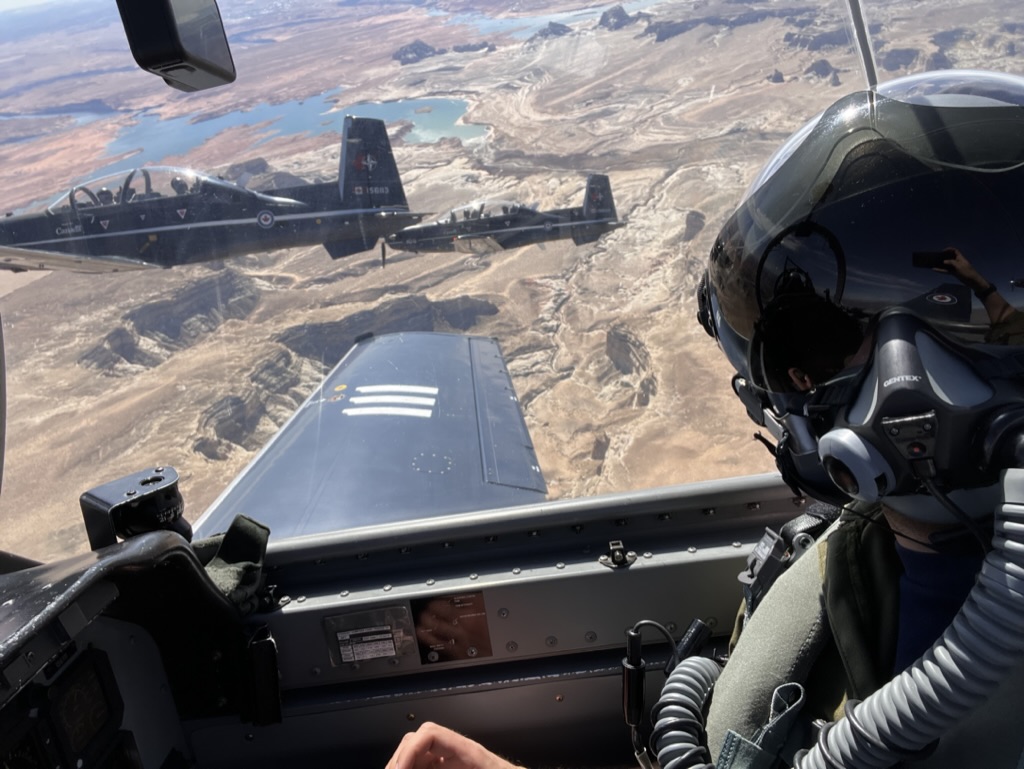
This course is demanding, but that’s what makes it so rewarding. Here’s a breakdown of the 4 Primary Phases you will learn:
- Clearhood (CH): In the clearhood phase you will learn to fly the aircraft in VMC conditions. It is a gradual ramp-up phase which will get you comfortable flying in a high performance airplane and later incorporate some advanced handling of the plane. This phase is composed of 16 dual flights and three solos, the first of which will be after your 8th CH mission. After you have learned to handle the “basics” ie takeoff and landing, pattern references, stall recoveries and basic turns (Your primary Angle of Bank used in this airplane will be at a 60degree and 2 G turn), you will move onto learning how to fly basic aerobatic sequences. These include: Loops, Cloverleafs, Cuban 8’s, Roll of the Top and Half Roll Pull through.
- Instrument Flying Procedures (IF): In the IF phase you will get to learn how to fly during IMC conditions simulating flying in clouds (and at times even getting actual IFR time). This phase teaches you how to fly relying on your instruments and is a much different phase from CH. Gentler and more precise control inputs are taught for precision flying – you will learn why when you actually encounter flying in clouds. Procedures you will be expected to master include: IFR departure procedures and arrivals, VOR/ ILS/ GPS approaches, self navigation using a point-to-point method, holding techniques and more.
- Navigation Procedures: During the navigation phase you will get to fly this airplane at a low altitude and fast! You will be flying at 500′ Above Ground Level (AGL) and expected to maintain a 240kt Groundspeed (G/S). During this phase, precision and preparation are key. You will want to make sure all pre-flight preparation of mission materials are completed well for you and the instructor. Ensuring that you conduct sufficient route study of the navigation route you are about to fly prior to the mission will allow you to anticipate threats, checkpoints and your target (this is critical to your missions going well)
- Formation Flying: One of the most exciting phases of this course is formation flying! It is a highly valuable skill for military pilots (especially if your endeavour is to move onto becoming an RCAF Fighter Pilot). Here you and another student will get paired up to fly together and learn to maneouver the harvard ii in close formation. How close you ask? About 10′ apart! Using numerous references on the lead airplane, you will learn to stay in perfect position using nothing other than the visual cues of that airplane. This phase is best accomplished thinking about the flying as applying pressures rather than large control inputs. You will need to find perfect seating position so you can relax your arm and let just your hand make all of the inputs you need. While frustrating at first (due to likely large out of position oscillations), you will quickly gain experience in this phase.
Throughout the course, your instructors will closely monitor your technical skills, decision-making, and situational awareness. Their feedback will be a valuable tool to help you grow. That being said, mindset plays a big role. You must do everything you can to show up to every single mission ready to go and prepared. This means enough rest, understanding the maneouvers that are taught today and ready to go flying. The pace of this course can go between really slow and waiting days to fly a mission to flying twice a day. Preparation will always be key.
And trust me, flying consistently WILL make you better, even if it is a bit more fatiguing. Continuity will allow you to build muscle memory that will aid big time in your ability to fly better.
How to Stand Out and Succeed
Success in this course goes beyond just flying well. Here are some personal tips to help you excel:
- Nail the Basics: Make sure you have a solid understanding of flight principles, SOPs, and checklists. These are your foundation.
- Stay Fit, Mentally and Physically: This training will test your endurance. Keep up with regular exercise, get enough rest, and manage stress effectively.
- Take Feedback Seriously: Your instructors want you to succeed. Listen to their feedback and apply it. It makes all the difference.
- Manage Your Time Wisely: Balance is key—study, prepare for flights, and make sure you get enough rest. Stay organized.
- Know Your Aircraft: The better you understand the Harvard II—its systems and how it behaves—the more confident you’ll be in the cockpit.
- Keep Situational Awareness Sharp: Always be aware of your surroundings and anticipate changes. This is critical for safe and effective flying.
- Work Well with Others: You’re not in this alone. Communicate and collaborate with your instructors and fellow students to create a supportive learning environment.
Final Thoughts
Phase II training is tough, but you’re more than capable of conquering it. Take the time to master the Harvard II, stay disciplined with your studies, and approach every flight with focus and determination. By doing this, you’ll set yourself up for success and be well-prepared for the next steps in your military aviation career.
Stay sharp, fly safe, and enjoy the ride—you’ve got this!

